
© 2026 Resintel. All rights reserved. Supply/Demand data provided by and copyrighted by the American Chemistry Council.
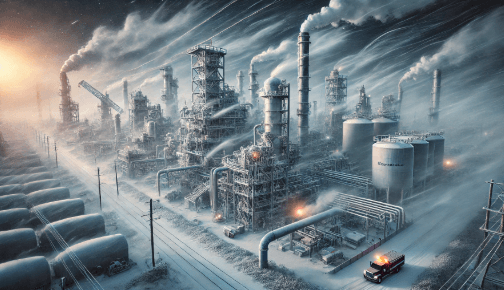
As Winter Storm Enzo barrels toward the Gulf Coast, residents and industries alike are bracing for what meteorologists warn could be a rare and severe winter event. The storm will bring freezing temperatures, icy conditions, and even snow to parts of Texas and Louisiana, and is already drawing comparisons to Winter Storm Uri, which paralyzed the region in February 2021.
According to the National Weather Service, Winter Storm Enzo is expected to deliver a brutal combination of freezing rain, sleet, and snow across a swath of the Gulf Coast. Houston is unaccustomed to freezing temperatures and may see its first measurable snowfall in ages with estimates of 4-6 inches which would bring the largest accumulation Harris County has seen since 1825, that’s 200 years! Infrastructure, including power grids and water systems, face significant stress as temperatures drop below freezing for extended periods.
The Gulf Coast is home to a dense concentration of petrochemical facilities and refineries, which are crucial to both the regional and national economy. During Uri, numerous plastics producers experienced significant disruptions, with plants shutting down due to frozen equipment and power outages, and other sustained enduring damages. These shutdowns not only led to immediate resin production losses but restricted supplies contributing to record high prices. If serious damage is sustained by resin reactors or shut downs remain in place for a significant amount of time due to Enzo, spot resin prices would continue to add to its New Year momentum. Although, overfilled warehouses would get the much needed break from fresh rail traffic and truckloads would disperse to fill in any supply gaps that are caused.
Although official statements regarding operational changes have been limited as of this writing, market discussions have centered around implementing disaster preparedness measures, preemptive shutdowns or reduced operations from major resin producers such as Formosa, Indorama, Braskem, LyondellBasell, ExxonMobil and TotalEnergies, which all have petrochemical / resin production in the area.
Logistics will be impacted as the Port of Houston announced all of its facilities would be closing on Tuesday, January 21. The Port has already closed container terminal truck gates today, and plans to suspend vessel ops this evening. Some warehouses in the Houston area have also sent notices to customers that they would be shutting down for one or more days due to the impending freeze.
Industry insiders suggest that many facilities are better prepared for preemptive shutdowns this time around. Following the 2021 polar storm Uri, companies have invested in refurbishing critical equipment for freezing conditions while enhancing or improving contingency plans. There is no guarantee those measures will be enough protection if Enzo’s impact mirrors Uri’s severity.
Local authorities and utility companies are mobilizing resources to mitigate Enzo’s potential impact. CenterPoint Energy, for example, has activated its emergency operations center and deployed additional crews to preemptively address outages. Meanwhile, residents are being urged to stock up on essentials, prepare for possible power outages, and protect their homes from freezing temperatures.
Experts warn that Enzo could strain resources already stretched thin by other recent weather events. As Winter Storm Enzo looms, the Gulf Coast faces a critical test. Will the lessons from Uri translate into improved resilience, or will history repeat itself? For now, all eyes are on the skies and on the preparedness of a region that knows all too well the cost of underestimating extreme weather.
Winter Storm Uri serves as a stark reminder of how devastating such weather events can be. Uri’s unprecedented cold snap left millions of Texans without power for days as the state’s electric grid operator, ERCOT, failed to meet surging demand. The storm caused at least 246 deaths, widespread water outages, and billions of dollars in property damage. Critical industries, including petrochemical plants and refineries along the Gulf Coast, were forced to shut down, compounding the economic toll.